
The Graduated Approach and Assess, Plan, Do, Review: A Practical Guide for Schools
The graduated approach is the four-stage cycle schools use to support pupils with special educational needs: assess, plan, do, review. It sits at the heart of SEN Support in the SEND Code of Practice, and it is the process Ofsted expects to see working in practice when it looks at inclusion. This guide walks through each stage of the assess, plan, do, review cycle, explains who is responsible for what, and shows how to keep the evidence trail that makes every cycle count.
What is the graduated approach?
The graduated approach is the step-by-step way schools identify and support children and young people with special educational needs. Rather than a one-off intervention, it is a repeating cycle: the school assesses a pupil’s needs, plans support, puts that support in place, then reviews whether it worked, feeding what it learns into the next cycle.
Each time the cycle repeats, the school’s understanding of the pupil grows and the support becomes better matched to their needs. That is the “graduated” part: support increases in a measured way, informed by evidence, rather than jumping straight to the most intensive option.
The approach applies to every pupil receiving SEN Support, whether or not they have an education, health and care (EHC) plan, and it covers all four broad areas of need in the Code of Practice, including social, emotional and mental health (SEMH).
The assess, plan, do, review cycle
The four stages of the assess, plan, do, review cycle (often shortened to APDR, or called the APDR cycle) work like this in practice.
1. Assess
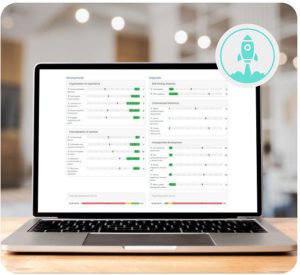
The class teacher and SENCO build a clear picture of the pupil’s needs. That means drawing together teacher observations and assessment data, the pupil’s own views, and the views of parents and carers. For SEMH needs this stage is often the hardest, because social and emotional development is not captured by attainment data alone. A structured, evidence-based measure gives this stage a benchmarked baseline you can defend at review and to an inspector. Educators can assess an individual pupil, a targeted group or a whole class with the Boxall Profile® Online, which is exactly the evidence base this stage needs.
2. Plan
The teacher, SENCO, pupil and parents agree the outcomes they are aiming for, the support that will be put in place, and a date to review it. Good plans are specific and observable. “Improve behaviour” is not a plan; “by the end of term, L stays in class for the full lesson in four lessons out of five, supported by a morning check-in with the teaching assistant” is. Named adults, named interventions, a timescale. In the Boxall Profile® Online, Learning Plans turn the assessment insights into exactly these targeted, named interventions. However it is recorded, the plan should be shared with everyone who works with the pupil.
3. Do
The support happens. The class teacher stays responsible for the pupil’s progress day to day, even where an intervention takes place away from the classroom, with the SENCO supporting the implementation. The key discipline at this stage is simply recording what was actually delivered, because a review is only as good as the record of what happened. Where a Learning Plan is in place, progress against it can be checked as the support is delivered, so the record builds as you go.
4. Review
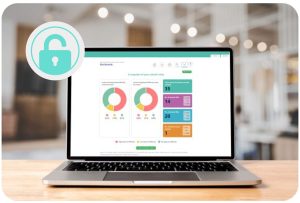
On the agreed date, the school looks at the evidence: did the pupil make the expected progress against the planned outcomes? Most schools run the cycle termly, so reviews line up with parents’ evenings and data drops, though shorter cycles can suit fast-changing needs. The review compares the pupil’s starting point with where they are now, using the same measures used at the assess stage so the comparison is like for like. With the Boxall Profile® Online, that means reassessing and comparing scores across the two assessment periods, so the change is visualised and the impact of the interventions is evidenced. The findings then feed the next cycle: support is adjusted, stepped up, scaled back or continued, and the cycle begins again.
Who is responsible for the graduated approach?
- The class or subject teacher remains responsible for the pupil’s progress and for the support delivered in the classroom, including where interventions happen elsewhere.
- The SENCO coordinates the process, advises on assessment and intervention, and makes sure records and reviews happen.
- Parents and carers must be involved: the Code of Practice expects schools to meet with parents regularly to review progress and agree next steps.
- The pupil should contribute their own views at every stage, in an age-appropriate way.
- School leaders and governors need the overview: how many pupils are on SEN Support, whether cycles are completing, and whether support is working. This is also what inspectors ask for when evidencing inclusion.
The graduated approach in the SEND Code of Practice
The graduated approach comes from the SEND Code of Practice (2015), the statutory guidance schools in England must have regard to. The Code says all settings “should adopt a graduated approach with four stages of action: assess, plan, do and review” (paragraph 5.36), and describes SEN support in schools as “a four-part cycle through which earlier decisions and actions are revisited, refined and revised” as understanding of the pupil’s needs grows (paragraph 6.44).
Two points matter for school leaders:
- The graduated approach and SEN Support are the same system. A pupil on SEN Support should always be inside an active assess, plan, do, review cycle. If cycles are not being recorded, the school cannot show the support is graduated.
- It is also the gateway to statutory assessment. Where a pupil does not make expected progress despite relevant and purposeful action over successive cycles, the evidence from those cycles forms the core of a request for an EHC needs assessment. Local authorities routinely ask to see APDR records before agreeing to assess.
The 2026 SEND White Paper signals reforms to how SEN Support is delivered and evidenced, with a stronger emphasis on inclusion in mainstream settings. The direction of travel makes well-recorded APDR cycles more important, not less: whatever the final legislation looks like, schools that can already evidence a working graduated approach will be ahead of it.
The graduated approach in the early years
The graduated approach applies in early years settings too, through the same four stages. The EYFS framework and chapter 5 of the Code of Practice expect early years practitioners to work in partnership with parents, drawing on the setting’s SENCO (or the area SENCO for private and voluntary providers) to assess, plan, do and review. Early identification carries the biggest returns of all: needs supported before school age are needs that do not escalate.
Evidencing assess and review with the Boxall Profile Online
The two stages where the graduated approach most often breaks down are the first and the last: assessing SEMH needs without a reliable measure, and reviewing progress without a like-for-like baseline. This is exactly what the Boxall Profile® Online is built for.
The Boxall Profile® Online provides a structured, evidence-based assessment of pupils’ social, emotional and behavioural development. Schools can assess an individual pupil, a targeted group or an entire class, enabling them to identify strengths, understand underlying needs and establish a clear baseline. From these insights, practitioners create personalised Learning Plans with targeted strategies and interventions to support the Plan and Do stages. As support is implemented, schools can export assessment data, monitor progress against previous assessments to visualise change over time, compare results across two assessment periods, and use the School Snapshot to understand patterns and trends across cohorts or the whole school. Together, these features provide the evidence that informs the Review stage, helping schools evaluate impact, refine provision and demonstrate outcomes.
Whatever measure you use, a defensible APDR record contains four things:
- the baseline at the assess stage, with dates and scores, not just a description
- the planned outcomes, the named adults and interventions, and the agreed review date
- a log of what was actually delivered during the cycle
- the like-for-like re-measure at review, and the decision that followed
That record is the artefact an inspector or an LA panel asks for. Our guide to evidencing inclusion for Ofsted with the Boxall Profile Online covers what that looks like at whole-school level.
Boxall assessment is also the foundation of nurture practice and the Six Principles of Nurture, so schools running nurture provision can use the same measure across both.
Ready to get started?
Choose the subscription that’s right for your school or experience the Boxall Profile® Online first with a free 30-day trial. Assess pupils, invite colleagues to explore the platform, and discover how the Boxall Profile® can help you identify need, plan support and measure progress with confidence.
Start your free trial today or view our subscription plans to find the best fit for your school.
Frequently asked questions
What are the four stages of the graduated approach?
Assess, plan, do, review. The school assesses the pupil’s needs, plans outcomes and support with parents and the pupil, delivers that support, then reviews progress against the starting point. The cycle then repeats, with each round informed by the last.
Is the graduated approach a legal requirement?
The graduated approach is set out in the SEND Code of Practice (2015), statutory guidance that schools, maintained nurseries and local authorities in England must have regard to. In practice, a school supporting pupils at SEN Support is expected to be able to show assess, plan, do, review cycles in action.
What is the APDR cycle?
APDR is simply the abbreviation of assess, plan, do, review, the four stages of the graduated approach. Some schools and local authorities call it the APDR cycle, the SEN Support cycle or the graduated response; they all describe the same process.
How does the graduated approach apply to a pupil with autism?
The same four-stage cycle applies whatever the pupil’s area of need. For an autistic pupil the assess stage draws together the same evidence, the plan reflects strategies suited to that pupil’s profile, and the review measures progress against their own starting point. The cycle is built around the individual pupil rather than the label, which is also a helpful way to explain it to parents: the support responds to what the evidence shows their child needs.
How long should an assess, plan, do, review cycle last?
The Code of Practice does not fix a length. Many schools run cycles termly so that reviews line up with parents’ evenings and data drops, but shorter cycles can suit fast-changing needs. What matters is that a review date is set at the plan stage and kept.
What happens if a pupil does not make progress under the graduated approach?
Support is stepped up through further cycles, drawing on more specialist help where needed. If the pupil still does not make expected progress despite relevant and purposeful action, the school or parents can request an EHC needs assessment, and the recorded APDR cycles become the core evidence for that request.
How is the graduated approach different from SEN Support?
They are two names for the same system: SEN Support is the status, and the graduated approach is the process a pupil on SEN Support moves through. If a child is on SEN Support, an assess, plan, do, review cycle should be live.