
Barriers to learning: how schools identify and remove them
Barriers to learning are the things that stop a pupil taking part in lessons and making progress. They sit in one of three places: within the pupil’s own development, in the teaching and the classroom, or in relationships and circumstances beyond the classroom, and most pupils who struggle face more than one at a time. Schools in England are expected to identify and remove them. The SEND Code of Practice says that where a pupil is identified as having special educational needs, schools “should take action to remove barriers to learning and put effective special educational provision in place”. The Department for Education now asks every school receiving the Inclusive Mainstream Fund to publish the barriers to learning and participation identified across its cohort in an inclusion strategy by 31 December 2026.
This guide is for SENCOs, class teachers and senior leaders in primary and secondary schools. It covers what barriers to learning are, the examples schools see most often, how staff identify them, a tiered menu of ways to remove them, and how to record what changed. Social, emotional and mental health barriers get particular attention, because they are often less visible in attainment data and they are the area the Boxall Profile® Online is designed to help staff measure.
Last reviewed: 14 October 2026. Written for the 2026 to 2027 school year.
- What barriers to learning are
- Examples of barriers to learning
- Identifying barriers to learning
- Removing barriers to learning, a tiered menu
- A worked example
- Barriers to learning for pupils with SEND and SEMH needs
- Barriers in your inclusion strategy, due 31 December 2026
- How the Boxall Profile® Online helps
- Frequently asked questions
- Universal, every pupil: Adaptive teaching, predictable routines and a safe base, a whole-class social and emotional assessment once a term, planned transitions, partnership with families. Staff take a like-for-like baseline for the whole class and leaders see cohort patterns in the School Snapshot.
- Targeted, pupils the universal offer cannot yet reach: A named key adult with a daily check-in, small-group nurture provision, targeted teaching of language, emotional regulation or social skills, a Learning Plan with a review date. The pupil’s profile helps staff choose the focus, Learning Plans hold the named strategies, the re-assessment helps evidence the review.
- Specialist, needs beyond what the school can meet alone: Advice from external services, a request for an EHC needs assessment, alternative or specialist provision. Dated assessments over successive cycles give the referral an account of what the school has tried and what changed.
What are barriers to learning?
A barrier to learning is anything that gets between a pupil and the curriculum. Barriers can belong to the pupil’s stage of development, such as not yet being able to manage a change of routine or to share an adult’s attention. They can belong to the teaching, such as instructions given faster than a pupil can process them, as well as to relationships and the classroom environment, and to life outside school, including attendance, health and home circumstances. The three groups interact, so a pupil who arrives late after a difficult morning may then find the first instruction of the lesson impossible to follow.
The phrase has a specific place in English education policy. The SEND Code of Practice describes the government’s commitment to “the progressive removal of barriers to learning and participation in mainstream education” (paragraph 1.26). It asks that lessons are “planned to address potential areas of difficulty and to remove barriers to pupil achievement” (paragraph 6.12). It expects assessment to be reviewed regularly so that “barriers to learning are identified and overcome” (paragraph 6.46). The Education Endowment Foundation’s guidance on special educational needs in mainstream schools opens with the same idea. An inclusive school “removes barriers to learning and participation, provides an education that is appropriate to pupils’ needs, and promotes high standards and the fulfilment of potential for all pupils”.
It follows that barriers to learning are wider than special educational needs, so a school looks for them across every pupil, including those who are quiet and have never attracted concern. It also follows that they are removed through the school’s usual practice, with adaptive teaching first and targeted support where teaching alone is not enough, rather than through a separate programme.
Examples of barriers to learning
Schools tend to meet the same barriers repeatedly. The list below groups them by the three places a barrier can sit, which is also a useful way to think about removing them. The four broad areas of need in the SEND Code of Practice, communication and interaction, cognition and learning, social, emotional and mental health, and sensory and physical needs, run through the first group.
Barriers within the pupil’s development
- Not yet having the language to follow instructions, ask for help or explain what is wrong.
- Gaps in prior knowledge, reading fluency or working memory that make new content hard to reach, such as a Year 8 pupil who cannot read the worded questions in a maths test.
- Difficulty managing feelings, so that frustration, anxiety or excitement interrupts the task.
- Not yet feeling safe enough with adults to accept help or correction.
- Finding transitions hard, between activities, rooms, key stages or schools, including the move to a secondary timetable with several teachers a day.
- Sensory needs, physical health or a disability that affects access to lessons or the building.
Barriers in the teaching and the classroom
- Instructions and explanations delivered faster, or in more steps, than a pupil can process.
- Tasks that assume knowledge some pupils do not yet have.
- Unpredictable routines and unclear expectations.
- Seating, noise, light and movement that make it harder to attend.
- Support that is withdrawn as soon as it starts to work, or never adjusted.
- In secondary schools, six different sets of expectations in a day, with no adult who sees the whole picture.
Barriers in relationships and beyond the classroom
- Not having a trusted adult in school.
- Friendship difficulties, isolation or bullying, including online.
- Attendance, lateness and time out of class.
- Home circumstances, caring responsibilities, bereavement, family change or poverty.
- Previous experience of school as a place of failure.
A behaviour is often the first sign of a barrier rather than the barrier itself. The Code is clear that “persistent disruptive or withdrawn behaviours do not necessarily mean that a child or young person has SEN”, and that where there are concerns there should be an assessment to determine whether there are any causal factors (paragraph 6.21). Nurture practice puts the same point another way, in one of the Six Principles of Nurture: all behaviour is communication. A pupil who leaves the room whenever writing starts may be telling staff about reading, about anxiety, or about the last lesson, and the response depends on which.

Identifying barriers to learning
Identification works best as an ordinary, regular part of teaching rather than a one-off exercise when a problem has become serious. The Code sets out where the assessment of a pupil’s needs should draw from (paragraph 6.45). It names the teacher’s own assessment and experience of the pupil, their previous progress and attainment, and the school’s core approach to progress, attainment and behaviour. It also names the pupil’s development in comparison to their peers and to national data, the views and experience of parents, the pupil’s own views and, where relevant, advice from external services. The DfE’s inclusion strategy guidance asks schools to look at the same sources across the whole cohort, including classroom observation, internal assessment data, what families and pupils say, and the school’s SEND, attendance, behaviour and attainment data. It is explicit that the search should not be limited to pupils already on the SEN register.
Three practical habits can help.
- Look at the whole class as well as the pupils causing concern. Barriers in cognition and learning usually show up in assessment data, so social and emotional barriers can be harder to see until a pupil’s attendance or behaviour has already changed. A structured whole-class measure of social and emotional development, completed by the person who knows the pupils best, can help staff notice pupils whose development may warrant closer consideration, including quieter pupils who have not previously attracted attention.
- Give staff an observation window before they complete a formal assessment. A new class needs time to settle and show its typical behaviours. For a formal social and emotional assessment, nurtureuk recommends that staff know and regularly observe the pupil for around half a term, approximately six weeks, before completing it, which for a September start usually means shortly before the autumn half-term break.
- Record the barrier, the date and the source. “Her assessment in October placed her outside the expected range for her age on the Developmental Strands, and her teacher had noticed she avoided any task involving reading aloud” links a barrier to evidence. “Staff had concerns from early in the year” provides much less to work with. That dated record is the starting point for the assess, plan, do, review cycle, and it gives the review something to be measured against later.
Removing barriers to learning: a tiered menu
The Education Endowment Foundation’s SEND guidance recommends that support should increase in intensity with need, from universal to targeted to specialist, with interventions carefully targeted through identification and assessment of need. The government’s 2026 SEND White Paper describes a similar four-level model, universal, targeted, targeted plus and specialist, which our SEND White Paper hub explains. The menu below follows the three-tier shape. It is organised around the Six Principles of Nurture, which give the tiers their logic: children’s learning is understood developmentally, the classroom offers a safe base, the importance of nurture for the development of wellbeing, language is a vital means of communication, all behaviour is communication, and the importance of transitions in children’s lives. Each row gives an action, what the evidence suggests, and how the Boxall Profile® Online supports the assess and review stages for it. A SENCO can lift the rows into a provision map alongside the barriers they answer.
Universal: for every pupil, through everyday teaching
These actions usually answer barriers in the teaching and the classroom, and the developmental barriers that most of a class share.
- Adaptive, high quality teaching: explicit instruction, scaffolding, flexible grouping, cognitive and metacognitive strategies and well-chosen technology. The EEF’s SEND guidance names these five strategies as the repertoire teachers should emphasise for pupils with SEND, and notes that good teaching for pupils with SEND is good teaching for all.
With the Boxall Profile® Online: The Developmental Strands can help staff see which building blocks for learning a class has and has not yet secured, so adaptations are linked to an identified need. - Predictable routines, clear expectations and consistent adults, so the classroom offers a safe base. The EEF asks schools to promote positive relationships, active engagement and wellbeing for all pupils, and nurture practice links emotional containment to cognitive learning.
With the Boxall Profile® Online: A whole-class assessment once the class has settled, around half a term in, gives a like-for-like baseline against which a change of routine can be reviewed. - A whole-school measure of social and emotional development, completed once a term. nurtureuk recommends completing an assessment once per term. An independent review of 37 studies over 20 years, published in Emotional and Behavioural Difficulties in 2025, reports growing evidence for the reliability and validity of the Boxall Profile®.
With the Boxall Profile® Online: Staff use the Boxall Profile® Online as this measure, assessing an individual, a group or a whole class against the expected range for age, and the School Snapshot helps leaders see patterns across cohorts. See pricing for whole-school subscriptions - Planned transitions between activities, classes, key stages and schools. Transition is one of the Six Principles of Nurture, and the Code asks that outcomes include successful transitions between phases (paragraph 6.42).
With the Boxall Profile® Online: An assessment completed before a transition and repeated once the pupil has settled can help staff see what changed across the move. - Partnership with families from the start. The Code asks that decisions are “informed by the insights of parents and those of children and young people themselves” (paragraph 1.25).
With the Boxall Profile® Online: Assessment results give staff and parents something concrete to discuss, in the pupil’s own terms rather than as a general concern.
Targeted: for pupils the universal offer cannot yet reach
These actions usually answer developmental barriers that persist after good teaching, and relationship barriers such as not having a trusted adult.
- A named key adult and a daily check-in (the classroom offers a safe base). The EEF’s SEND guidance asks schools to promote positive relationships for all pupils, and nurture practice makes a reliable adult the starting point.
With the Boxall Profile® Online: The pupil’s profile can help staff decide which developmental areas the check-in should focus on, and the review assessment suggests whether it has helped. - Small-group nurture provision, delivered by trained staff (children’s learning is understood developmentally). nurtureuk’s evidence pack reports that across 34 schools average attendance for pupils with identified SEND rose from 84.8% to 88.7% over ten months, and the North Somerset nurture group pilot recorded a 15% reduction in behaviours hindering access to education.
With the Boxall Profile® Online: The Boxall Profile® assessment is the assessment used in nurture group practice, so the baseline informs the targets and the re-assessment can help evidence the outcome. - Targeted teaching of language, emotional regulation or social skills (language is a vital means of communication). The EEF advises that small-group and one-to-one interventions are powerful but must be carefully selected and targeted through assessment, and warns that ineffective use of interventions can itself become a barrier to inclusion.
With the Boxall Profile® Online: Learning Plans help staff turn assessment results into named, targeted strategies with a review date. - A Learning Plan with named adults, named interventions, the expected impact and a review date (all behaviour is communication). This is the plan stage the Code describes: the teacher and the SENCO agree with the parent and the pupil the adjustments, interventions and support, the expected impact, and a clear date for review (paragraph 6.48).
With the Boxall Profile® Online: Learning Plans are built inside the platform from the assessment, and the two-period comparison can show movement at review. - Structured work with the family on a specific barrier, such as attendance or a bereavement (the importance of transitions in children’s lives). The Code asks schools to take parents’ concerns seriously and record them alongside the setting’s own assessment (paragraph 6.45).
With the Boxall Profile® Online: A shared, dated assessment gives the conversation a starting point and the review a measure.
Specialist: where needs are beyond what the school can meet alone
These actions answer barriers that remain after targeted support has been given time to work.
- Advice from external services, including educational psychology, speech and language therapy and mental health services. The Code expects advice from external support services to inform assessment where relevant (paragraph 6.45).
With the Boxall Profile® Online: Dated assessments over successive cycles give the referral a clear account of what the school has already tried and what changed. - A request for an EHC needs assessment, where a pupil has not made expected progress despite relevant and purposeful action. The Code sets this test for the local authority’s decision, and lists the evidence it will weigh, including attainment and rate of progress, the nature of the need, the action taken and the pupil’s development and health (paragraph 9.14).
With the Boxall Profile® Online: The like-for-like record of baseline, provision and review gives the local authority part of that evidence, alongside attainment, health and other records. - Alternative or specialist provision. A decision for the local authority with the family, informed by the school’s evidence.
With the Boxall Profile® Online: The same record travels with the pupil, so the next setting starts from a known point.
The Boxall Profile® Online assesses social and emotional development, which sits within social, emotional and mental health, one of the four broad areas of need. For barriers in cognition and learning, communication and interaction, and sensory and physical needs, the assessment sits alongside the school’s other records rather than replacing them.
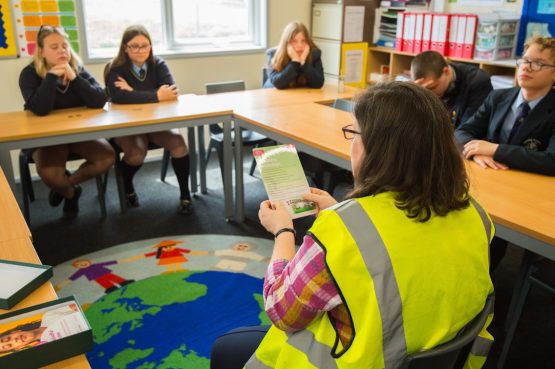
A worked example, from barrier to review
A Year 8 pupil starts in September and is quiet in every lesson. Her form tutor knows her by half term and completes the Boxall Profile® Online assessment in the week before the break. The result places her outside the expected range for her age on several Developmental Strands, and the tutor notes that she has not spoken in class discussion since the first week. The identified barrier is recorded with the date and the source: social and emotional, developmental, first seen at the October assessment.
The universal offer stays in place, and the school adds one targeted action. The SENCO and the form tutor agree a Learning Plan that names the form tutor as her key adult for a two-minute check-in each morning. It sets an expected impact of contributing once a lesson in two subjects by February, and fixes a review date in the first week of March. Her parents see the plan and add that she has been anxious about a friendship since the summer, which the plan records. In March the tutor completes the assessment again on the same items. When the tutor compares the two assessments, the strands the plan targeted have moved towards the expected range, and her English and history teachers report that she now answers when asked. The school records what changed, keeps the check-in going, and decides that no further tier is needed for now.
That record, a dated baseline, a plan with an expected impact, a log of what happened and a like-for-like review, is the assess, plan, do, review cycle the Code describes, and our guide to the graduated approach walks through each stage.
When your staff are ready to take a first baseline for a class or a year group, see pricing and start a 30 day trial, or look at the platform first.

Barriers to learning for pupils with SEND and SEMH needs
Any pupil can face barriers to learning, and pupils with special educational needs often face more of them and for longer, so the school’s duty to act is set out in law. The Code asks that lessons are planned to remove barriers to pupil achievement so that, in many cases, pupils with SEN and disabilities can study the full national curriculum (paragraph 6.12), and it makes removing barriers to learning the purpose of SEN support itself (paragraphs 6.43 and 6.44).
Social, emotional and mental health needs deserve a specific mention because of how they present. The Code describes a wide range of difficulties that “manifest themselves in many ways”, including “becoming withdrawn or isolated, as well as displaying challenging, disruptive or disturbing behaviour” (paragraph 6.32). The withdrawn pupil can be the one most easily missed. Where a pupil’s social and emotional development is the barrier, the most useful first step is usually to describe it in developmental terms, what the pupil can and cannot yet manage in school, rather than as a label. That description points at what to teach or provide next. Our guide to assessing SEMH needs in schools and our SEMH resources go further into this area.

Barriers to learning in your inclusion strategy
If your school receives the Inclusive Mainstream Fund, the DfE’s guidance asks you to publish an inclusion strategy on your website by 31 December 2026. The first of its four required areas is the barriers to learning and participation identified across your cohort, and the guidance describes these as the commonly occurring barriers rather than the needs of individual pupils. The other three areas are the activities invested in to alleviate those barriers, intended outcomes, and a review of the previous academic year. The guidance names the sources to draw on and is clear that the exercise should not be limited to pupils on the SEN register or holding an EHC plan.
That first area asks about the cohort as a whole, so it is where a whole-school measure is most useful. The School Snapshot in the Boxall Profile® Online helps leaders see patterns across classes and year groups. A strategy can then say which social and emotional barriers are common in a year group and what the school is funding in response, with a baseline the year-end review can return to.
An entry in that first area might read: “Across Year 8, 22 of 180 pupils assessed in October were outside the expected range for their age on the Developmental Strands, concentrated in two forms. We are funding a key adult check-in for those pupils and small-group nurture provision for eight of them, and will re-assess in March.”
Our guide to writing your school’s inclusion strategy on nurtureuk covers the whole document, and our guide to the Boxall Profile® Online and Ofsted covers how the strategy and the evidence behind it are considered during inspection.
Ofsted’s inspection information for state-funded schools, in use from September 2026, gives particular attention to the experiences and outcomes of disadvantaged pupils, pupils with SEND, pupils known to children’s social care “and those who face other barriers to their learning and/or wellbeing”. It asks schools to have a list of those pupils available for case sampling. A school that identifies barriers as part of its normal practice already has that list.
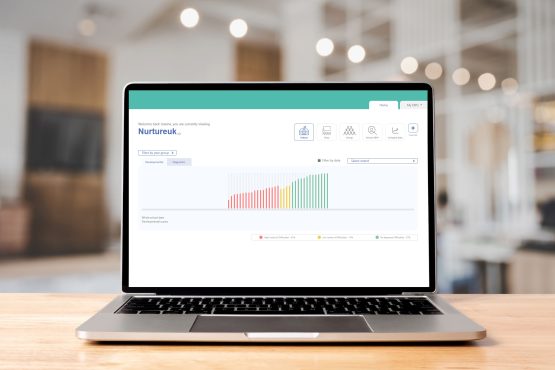
How the Boxall Profile® Online helps staff identify and track barriers
The Boxall Profile® Online is a whole-school assessment of social and emotional development, completed by the member of staff who knows the pupil best, with one version for nursery and primary and one for secondary. Each pupil is compared against the expected range for their age across two sections of 34 items each. The Developmental Strands describe the building blocks for learning a pupil has secured, and the Diagnostic Profile describes behaviours that may be affecting the pupil’s engagement in school. It does not provide a clinical or medical diagnosis. The result is a description of what a pupil can and cannot yet manage in school, in terms staff can plan from.
At the assess stage it can help staff identify social and emotional barriers, including in pupils who have not attracted concern, and at review, completed again on the same items, it can help staff see what has changed. In between, Learning Plans help staff turn the results into named strategies, and leaders can export data, compare two assessment periods and use the School Snapshot to see patterns across the school.
There is one practical point on timing. A class that started in September has usually reached the half-term observation window by October, so the first baseline can be taken then. The 30 day trial allows staff to complete that first assessment, and because new assessments stop when the trial ends, the review assessment needs a subscription. If your staff are still getting to know a new class, it makes sense to start the trial when they are ready to assess.
When your staff are ready to take a first baseline for a class or a year group, see pricing and start a 30 day trial, or look at the platform first.
Frequently asked questions
What does the term barriers to learning mean?
Barriers to learning are the things that stop a pupil taking part in lessons and making progress. They sit in one of three places: within the pupil’s development, in the teaching and the classroom, or in relationships and circumstances beyond the classroom, and most pupils who struggle face more than one at a time. Schools in England are expected to identify and remove them as part of their usual practice.
What are some examples of barriers to learning in the classroom?
Common examples include instructions given faster than a pupil can process them, tasks that assume knowledge a pupil does not yet have, unpredictable routines, and noise or seating that make attention harder. Not having a trusted adult in the room, difficulty managing feelings, and gaps in language or reading fluency are also common. Attendance and circumstances at home act as barriers too, even though they begin outside the classroom.
How do schools identify barriers to learning?
The SEND Code of Practice asks schools to draw on the teacher’s assessment and experience, the pupil’s progress and attainment, comparison with peers and national data, the views of parents and the pupil, and advice from external services where relevant. Looking at the whole class with a structured measure, giving staff an observation window, and recording each barrier with a date and a source can help make identification more reliable.
What is the difference between a barrier to learning and a special educational need?
A special educational need is a learning difficulty or disability that calls for special educational provision, as defined in the Children and Families Act 2014. A barrier to learning is broader, since any pupil can face one, with or without an identified need. The Code says persistent disruptive or withdrawn behaviour does not necessarily mean a pupil has SEN, so the first step is an assessment of whether there are any causal factors.
How can teachers help pupils with barriers to learning?
Adaptive teaching can remove many barriers for many pupils: explicit instruction, scaffolding, flexible grouping and predictable routines. Where that is not enough, targeted support such as a key adult, small-group nurture provision or a Learning Plan with named interventions and a review date follows, and specialist advice is sought where needs are beyond what the school can meet alone.
What are SEMH barriers to learning?
SEMH barriers to learning are difficulties in a pupil’s social and emotional development, such as anxiety, difficulty managing feelings, not feeling safe with adults, or finding transitions hard, which can affect their engagement in school as much as any gap in knowledge. They can present as withdrawal as easily as disruption, which is why a whole-class measure of social and emotional development helps staff see them.
What should an inclusion strategy say about barriers to learning?
The DfE’s guidance requires an inclusion strategy to set out the barriers to learning and participation identified across the school’s cohort, the activities funded to alleviate them with budgeted costs, the intended outcomes, and a review of the previous year. Schools receiving the Inclusive Mainstream Fund must publish it on their website by 31 December 2026.
Take this with you
- The graduated approach and the assess, plan, do, review cycle, our guide to the cycle this page sits inside.
- The Boxall Profile® Online and Ofsted, how the evidence is considered during inspection.
- Writing your school’s inclusion strategy, the DfE requirements and the 31 December 2026 deadline, on nurtureuk.
- The Six Principles of Nurture, the organising logic behind the tiered menu.
- The EEF’s SEND guidance, the five recommendations the menu draws on.