

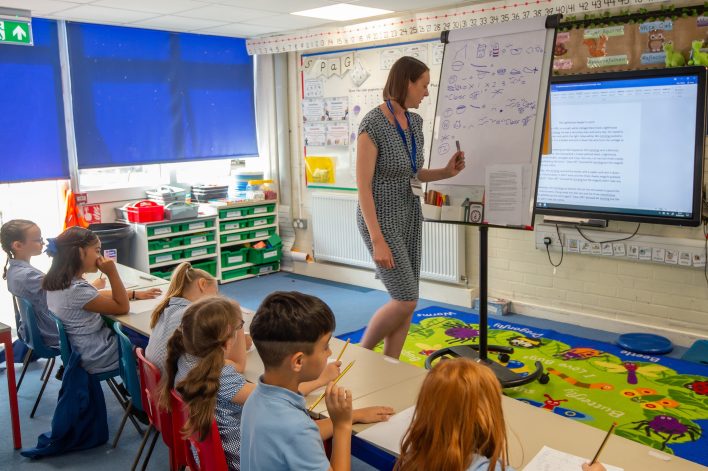
An inclusion strategy sets out what you want to change for pupils. Putting it into practice means deciding what staff will do differently in the classroom, how they’ll do it consistently and how you’ll know whether it’s helping.
By November, your autumn Boxall Profile® Online assessments can give you a starting point. Bring the findings together with staff observations and pupil voice to ask where are several pupils experiencing the same barrier, and what could we change in the school day to help? For schools planning how to use the Inclusive Mainstream Fund (IMF), that question can help turn a broad priority into a specific action. Explore nurtureuk’s Inclusive Mainstream Fund guidance.
What could change in the classroom?
Anne and Jayden’s examples show how staff can use Boxall Profile® assessments alongside what they see and hear from pupils to make small changes that help more pupils take part.
Anne, a Year 5 pupil, enjoys creative activities and has positive relationships with several adults. Staff notice she’s contributing less in class and finds changes to routine difficult. Her Boxall Profile® assessment and a conversation with an adult she trusts can help staff understand when she feels most comfortable joining in. If several pupils find whole-class discussion daunting, the teacher could give everyone a minute to talk through an idea with a partner before inviting responses.
Jayden, a Year 9 pupil, uses humour when work gets difficult and can push back when corrected in front of peers. His assessment, staff observations and a conversation with Jayden could help teachers explore what makes it harder for him to re-engage. Using quiet, private prompts as part of everyday classroom practice gives Jayden and other pupils a way to get back on track without drawing attention to them. Read Anne and Jayden’s examples in nurtureuk’s universal inclusion guide.
Agree what to try and how you’ll review it
- Choose one shared need to focus on. Use your assessment findings, staff observations and pupil voice to identify where pupils need more support. Be specific about when the barrier comes up and what helps.
- Agree what staff will do differently. Choose one adjustment staff can use consistently. Record it in a Class or Group Learning Plan in the Boxall Profile® Online so everyone involved knows what to try, when to use it and what to look for.
- Use reassessment to review progress. Once the strategy has had time to become part of everyday practice, reassess pupils and compare their results with your autumn baseline in the Boxall Profile® Online. Consider the data alongside what staff observe and what pupils tell you. In Anne’s class, for example, you could look at whether more pupils are contributing and ask whether talking an idea through first helps. Use that evidence to decide what to keep, what to adapt and where further support may be needed.
Give staff the tools to put your strategy into practice
The Nurture School Foundations: The Relational Practice Award subscription combines 12 months of access to the Boxall Profile® Online with self-paced online training and practical resources from nurtureuk. Use the assessments to understand pupils’ needs and track progress, and the training to build a shared approach to how staff respond in classrooms and across the school.
Are you ready to lead the change?
Achieving the Nurture School Foundations: The Relational Practice Award is a powerful statement of intent and is the first step on a relational and nurturing journey. Log in or sign up here to purchase and get started on your journey toward the Foundation Nurture School Award today.